The Man Who Opened the Ocean to the World
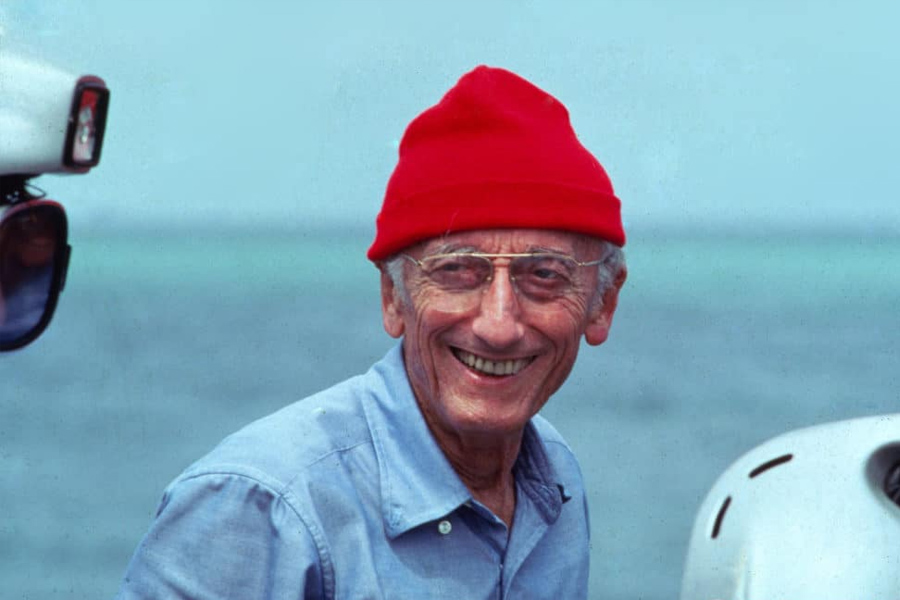
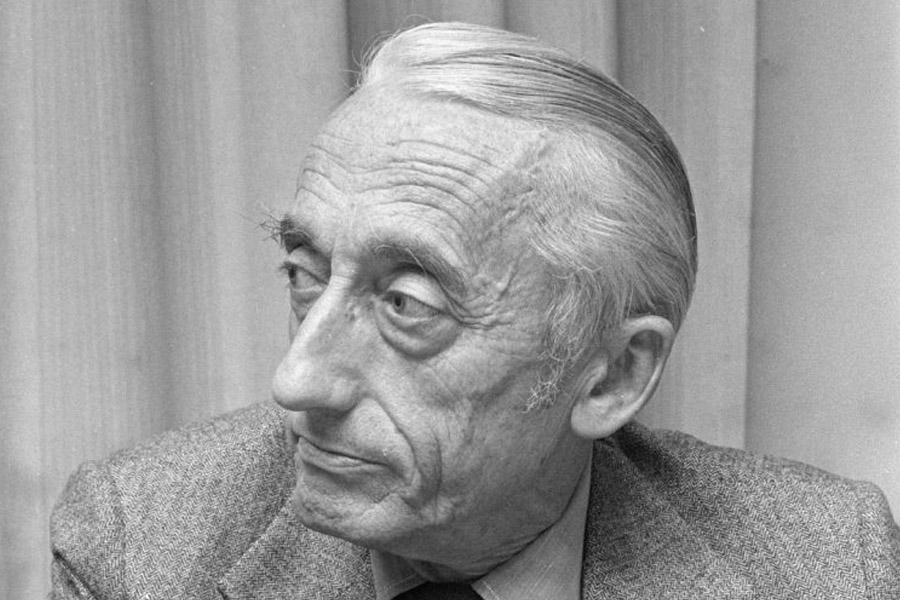
Jacques-Yves Cousteau transformed the water into a live stage. He was more than a naval officer and filmmaker, born in Saint-André-de-Cubzac, France, on June 11, 1910, and died in Paris on June 25, 1997. He explored the blue frontier, co-invented, told stories, and was one of the 20th century’s most vocal marine conservationists.
He crossed several worlds in his career. He worked in the French Navy, developed contemporary scuba technology, led expeditions on the famed Calypso, wrote books, filmed award-winning videos, and promoted ocean conservation before it was mainstream. I thought his biggest accomplishment was more than going underwater. He invited us to join him.
Early Life and the Turning Point That Changed Everything
Cousteau’s family valued education and globalization. His father, Daniel Cousteau, was a lawyer and businessman who brought travel and culture home. He was raised by Élisabeth Duranthon Cousteau, who fostered curiosity and learning.
Young Cousteau attended the French Naval Academy in 1930. He first wanted to fly navally. That goal may have defined his life if not for a 1930s car tragedy. He swam hard during recuperation. A setback became a doorway. Water was treatment, then calling.
By 1936, he had discovered underwater goggles and started diving seriously. That moment mattered. It was the first clear sign that the sea would become his true domain. Some lives change with a loud crash. Others pivot quietly, like a compass needle turning north.
Family Roots and the Brother Who Took Another Path
Family life contrasted for Cousteau. While his brother Pierre-Antoine Cousteau was a journalist and writer, his reputation rose differently. Jacques gained fame for discovery and environmental wonder, whereas Pierre-Antoine became known for political journalism and provocative opinions following World War II.
That difference highlights something important to me. Families often share a name but not a destiny. In the Cousteau household, one brother looked toward the sea and science, while the other moved through the storms of politics and ideology.
Simone Melchior Cousteau and the First Great Partnership
Jacques married Simone Melchior 1937. She was more than a famous explorer’s wife. She was one of Cousteau’s secret motors. Simone, known as “La Bergère,” or “The Shepherdess,” managed logistics, economics, and expedition logistics on the Calypso.
Her role is noteworthy since maritime stories frequently feature the captain on deck, not the person balancing the books, addressing supply difficulties, and keeping a mission alive. Simone sold family valuables to fund early diving studies. Not a small footnote. Belief became sacrifice.
She remained married to Jacques until her death in 1990. Over those decades, she shared not just his surname, but the burden and motion of a life spent in pursuit of the underwater world.
Francine Cousteau and a Later Chapter in His Personal Life
After Simone’s death, Jacques married Francine Triplet Cousteau in 1991. Their relationship had already become publicly known in his later years, and together they had two children before the marriage: Diane Cousteau and Pierre-Yves Cousteau.
Contrary to popular belief, Cousteau’s life was more challenging during this time. The connection caused family strife because it overlapped with his first marriage. Later conflicts over legacy, inheritance, and Cousteau stewardship sprang from that tension.
Francine became important in preserving his legacy and in managing intellectual property tied to his work. In that sense, she became part of the long afterlife of his career, where family, public memory, and commercial rights all met.
His Children and the Shape of Inheritance
Jacques Cousteau’s family tree extends like branching coral, with several descendants carrying pieces of his mission into new waters.
Jean-Michel Cousteau, born in 1938, was a prominent environmentalist. After several excursions, he founded organizations and educational programs. He became an adventurer, lecturer, author, and filmmaker. I think Jean-Michel is a bridge character who inherited a prominent name and public responsibilities.
Philippe Cousteau, born in 1940, was considered Jacques’ successor. He was crucial to Calypso excursions and documentaries. One of Cousteau’s greatest disasters was his 1979 Catalina flying-boat crash near Lisbon, Portugal. His age was 38. Jacques’ devastation went beyond fatherhood. The future leadership of his entire business altered.
Diane Cousteau and Pierre-Yves Cousteau, the children of Jacques and Francine, have generally kept lower public profiles than Jean-Michel and some of the next generation. Still, they remain part of the ongoing family structure surrounding the Cousteau legacy.
Grandchildren Who Carried the Flame Forward
The legacy did not end with Jacques’ children. Several grandchildren became public figures in environmental work and exploration.
Fabien Cousteau, son of Jean-Michel Cousteau, became known internationally as an ocean explorer, conservationist, filmmaker, and aquanaut. His underwater habitat missions echo his grandfather’s spirit while speaking to modern concerns about climate, biodiversity, and ocean resilience.
Alexandra Cousteau, daughter of Philippe Cousteau, built a strong profile as an environmental advocate, filmmaker, explorer, and speaker focused on water and sustainability. Her work shows how the Cousteau name expanded from underwater discovery into wider ecological advocacy.
Philippe Cousteau Jr., also Philippe’s son, became an environmental educator, author, and media figure, and co-founded education-focused environmental initiatives. His name itself is a memorial, a way of carrying his father’s memory into public life.
The Aqua-Lung and the Technology That Changed Diving
One of Cousteau’s most lasting achievements came in 1943, when he co-developed the Aqua-Lung with engineer Émile Gagnan. This practical open-circuit scuba system transformed diving from a limited and dangerous exercise into something far more flexible and revolutionary.
I think his mythology revolves upon this invention. Not only a technical breakthrough. Keys unleash entire worlds. It helped scientists, filmmakers, explorers, and recreational divers. Wide and peaceful, the ocean was always there. Aqua-Lung made it possible.
The Calypso and the Floating Symbol of Exploration
In 1950, Cousteau bought and renovated the RV Calypso, a famous research ship. The Aqua-Lung was the key, the Calypso the roaming castle. It hosted decades of expeditions, study, cinematography, and global fame.
The ship was more than steel and machinery. It became a symbol. When audiences saw the Calypso, they knew discovery was near. Through storms, remote coastlines, reefs, and deep waters, the vessel carried not just a crew but an idea: that the ocean deserved both wonder and protection.
In 1996, the Calypso was severely damaged in Singapore harbor. Even that event felt symbolic, like a weathered banner torn after a long campaign.
Film, Television, and the Art of Making the Sea Visible
Cousteau pioneered underwater filmmaking at a time when doing so was technically difficult and physically demanding. His major productions included The Silent World, The Undersea World of Jacques Cousteau, and World Without Sun.
After his 1953 book, The Silent World became famous. The 1956 film received the Palme d’Or at Cannes and the Academy Award for Best Documentary Feature. It is the only documentary to receive the top Cannes award. In 1964, World Without Sun received another Oscar for Best Documentary.
These films altered public perception. Seas were typically mapped as abstract spaces before Cousteau. After Cousteau, it had faces, movement, color, danger, and grace. Fish sparkled like coins. Coral cities breathed. The ocean was no longer blank.
Environmental Advocacy and Public Influence
By the 1970s, Cousteau had become one of the earliest globally recognized advocates for marine conservation. In 1973, he founded The Cousteau Society, which helped promote ocean protection and public education.
His influence touched marine-protection policy, anti-pollution campaigns, ocean-science education, and even public awareness of underwater archaeology. He was not just documenting beauty. He was warning that beauty could be damaged.
I think this part of his life explains why he still matters. Exploration alone can dazzle people for a season. Advocacy gives that discovery a moral direction.
Key Dates at a Glance
| Year | Event |
|---|---|
| 1910 | Born in Saint-André-de-Cubzac, France |
| 1930 | Enters the French Naval Academy |
| 1936 | Begins serious diving |
| 1937 | Marries Simone Melchior |
| 1938 | Jean-Michel Cousteau is born |
| 1940 | Philippe Cousteau is born |
| 1943 | Co-develops the Aqua-Lung with Émile Gagnan |
| 1950 | Acquires the Calypso |
| 1953 | Publishes The Silent World |
| 1956 | The Silent World wins major film honors |
| 1964 | World Without Sun wins an Academy Award |
| 1973 | Founds The Cousteau Society |
| 1979 | Philippe Cousteau dies in an aviation accident |
| 1990 | Simone Cousteau dies |
| 1991 | Marries Francine Cousteau |
| 1997 | Dies in Paris at age 87 |
FAQ
Who was Jacque Cousteau?
Jacque Cousteau, more commonly known as Jacques-Yves Cousteau, was a French naval officer, oceanographer, inventor, filmmaker, author, explorer, and environmental advocate. He was born in 1910 and became one of the most influential figures in the history of underwater exploration.
Why is Jacques Cousteau famous?
He is famous for co-developing the Aqua-Lung in 1943, leading expeditions aboard the Calypso, and creating documentaries that introduced global audiences to marine life. He also became a major public voice for ocean conservation.
Who was Simone Cousteau?
Simone Melchior Cousteau was Jacques Cousteau’s first wife, whom he married in 1937. She played a major role in supporting and sustaining his expeditions, helped manage logistics and finances, and was known aboard the Calypso as “La Bergère.”
Who was Francine Cousteau?
Francine Triplet Cousteau was Jacques Cousteau’s second wife. They married in 1991, after the death of Simone. Francine also became involved in preserving his legacy and managing matters related to his intellectual property.
How many children did Jacques Cousteau have?
He had four children mentioned in this family history: Jean-Michel Cousteau, Philippe Cousteau, Diane Cousteau, and Pierre-Yves Cousteau.
Which of his children became most publicly known?
Jean-Michel Cousteau became one of the most publicly visible heirs to the family mission through environmental education, exploration, and filmmaking. Philippe Cousteau was also very prominent and was widely regarded as Jacques’ likely successor before his death in 1979.
What happened to Philippe Cousteau?
Philippe Cousteau died in 1979 in a Catalina flying-boat accident near Lisbon, Portugal. He was 38 years old, and his death deeply affected Jacques Cousteau and the future of the Cousteau expeditions.
Which grandchildren continued the family legacy?
Among the most visible grandchildren are Fabien Cousteau, Alexandra Cousteau, and Philippe Cousteau Jr. Each became active in environmental communication, conservation, education, or exploration.
What was the Aqua-Lung?
The Aqua-Lung was the first practical open-circuit scuba system, co-developed by Jacques Cousteau and Émile Gagnan in 1943. It revolutionized underwater diving for both scientific and recreational use.
What was the Calypso?
The RV Calypso was Cousteau’s famous research vessel, acquired in 1950 and converted for ocean expeditions. It became the floating base for decades of exploration and documentary filmmaking.
What were Jacques Cousteau’s most famous films?
His best-known productions include The Silent World, The Undersea World of Jacques Cousteau, and World Without Sun. These works helped bring the underwater world into homes across the globe.
What is Jacques Cousteau’s lasting legacy?
His legacy lives in modern scuba diving, marine documentary filmmaking, environmental advocacy, ocean education, and the ongoing public work of several family members who continue to champion water and conservation issues.