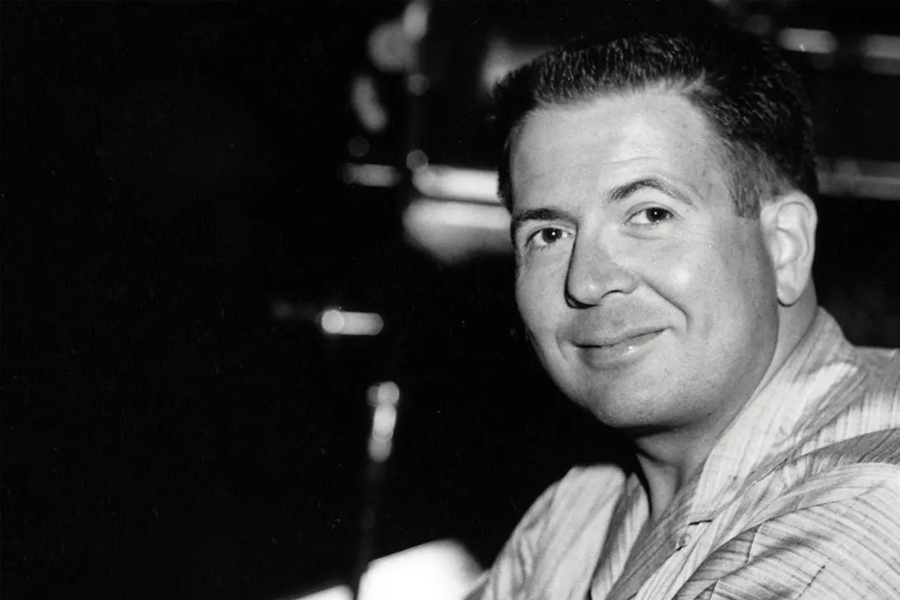
Bert I Gordon and the Outsized World He Created
Bert I Gordon stands out in American cult cinema history as a towering, weird, innovative, and unmistakable creature. Gordon was one of the most famous American low-budget science fiction and horror filmmakers, born in Kenosha, Wisconsin, on September 24, 1922. He died in Los Angeles on March 8, 2023, at 100, leaving a decades-long career and a reputation that never required polish. It required imagination.
He was known for making movies about one powerful idea: make everything bigger. Gigant insects. Human giants. Large teens. Giant threats converted neighborhoods, buildings, and landscapes into toys. His moniker, Mr. B.I.G., suited him well. It reflected his initials and visual thinking range. He had objectives despite financial constraints.
His films remain memorable because of that. They’re handcrafted but confident. Practical tricks, rear projection, enormous props, and determination bind them. To watch him is like to watch a magician refuse to leave the stage because the curtain is small.
Early Life and the First Spark
Sadeline Barnett Gordon and Charles Abraham Gordon had Bert I Gordon, known as Bert Ira Gordon. Russian Jewish, his family background helps put him in the larger immigration tale that formed 20th-century American life. While growing up in Wisconsin, far from the Hollywood system he would later enter, his defining instinct surfaced early.
He received a camera from his aunt in 1935 at 13. Looking back, that gift seems mythical. For Gordon, it opened doors. Before making feature films, he experimented with visual narrative in 16mm home movies as a youth. Many filmmakers learn via schools, studios, or top mentors. Gordon’s route feels mechanical and intimate, like disassembling a clock to make one.
World War II halted his University of Wisconsin studies. He quit college for the Army Air Forces. War, service, and rapid change influenced his early adulthood, like many of his generation. He returned to filmmaking with the restless realism that defined his career after the war.
Building a Career From the Ground Up
Gordon worked in low-key movie production before becoming known for enormous animals and visual effects. He advertised. He edited British films into 30-minute TV shows. He was a Racket Squad production assistant and Serpent Island cameraman. None of this sounds glamorous. Everything sounds useful.
I consider these years his workshop. He learned rhythm, speed, frame, and efficiency. He was also learning to make something watchable under pressure and restrictions. A superpower later developed from this skill. Gordon didn’t wait for big budgets. He turned scarcity into spectacle.
His first feature breakthrough came in 1955 with King Dinosaur. That film opened the gate. Once he found the territory that suited him, he moved through it with confidence. By the late 1950s, he had entered the period that made his name unforgettable among genre fans.
The Classic Giant Monster Years
From 1957 to 1958, Gordon directed or released influential pictures such as The Cyclops, The Amazing Colossal Man, War of the Colossal Beast, Beginning of the End, Earth vs. the Spider, and Attack of the Puppet People, shaping his personality. These films were obvious. They were designed to draw notice.
The trend was evident. Gordon turned scale into drama. Man grows too big for his surroundings. Public fear grows from insects. Humans become tiny, powerless figures in their neighborhoods. Ordinary becomes unstable. Unsafe street corners. A trap room. A spider becomes a moving nightmare.
His effects work emphasized back projection and practical illusions. These strategies can be pleasantly evident today. Visibility is appealing, though. Almost see the gears turning, but the dream works. Gordon realized that movies may be imperfect. Sometimes conviction is enough.
A Career That Kept Moving
Gordon did not stop with his first run of monster classics. In 1960, he directed Tormented and The Boy and the Pirates. The latter became especially notable because it featured his daughter Susan Gordon, linking his family life and filmmaking life in a tangible way.
He worked in fantasy, horror, and exploitation throughout the 1960s and 1970s. He appeared in The Magic Sword, Village of the Giants, Picture Mommy Dead, How to Succeed with Sex, The Witching, The Mad Bomber, The Food of the Gods, and Empire of the Ants over this extended middle stretch others titles were gothic horror, others sensationalism, and some giant-creature extravaganza. Gordon’s knack for outstanding ideas unified them.
Village of the Giants (1965) proved he could convert teenage culture into another big experiment. He seems to return to the same hidden fixation through different portals. Size, distortion, and unbalance intrigued him. His films featured size as a character.

The Mr. B.I.G. Persona and Legacy
The term Mr. B.I.G. was not just a trendy label. It recorded Gordon’s whole public identity architecture. Known for his giant-creature films, he became a genre icon. Gordon was around if a narrative involves a huge monster pounding through human space.
By 2003, his contribution had become substantial enough to be honored in a retrospective at the University of Illinois Insect Fear Film Festival. That tribute says a great deal. His movies did not merely survive as relics. They remained alive enough to be celebrated by new audiences.
The Amazing Colossal Worlds of Mr. B.I.G.: An Autobiographical Journey was his 2010 autobiography. The term fits—bold, showy, and cognizant of the odd world he built his life for. He attended screenings and interviews in later years, proving audience enthusiasm never waned.
His Parents and Family Background
His family narrative began with Bert I Gordon’s parents, Sadeline Barnett and Charles Abraham Gordon. Their names occur frequently in his life narratives, but their biographical data are scarce. Bert comes from a Russian Jewish family that presumably migrated, adapted, and survived in America.
I find it meaningful that so much of Gordon’s work involved transformation. Things grow. Things mutate. The ordinary changes shape. That does not mean biography explains art in a simple equation, but family roots matter. Every filmmaker carries some private weather into the studio.
His First Wife, Flora Lang Gordon
Bert I Gordon married Flora Lang in 1945. The marriage lasted until their divorce in 1979, a span of 34 years. That means Flora was present through the core rise of his career, including the years when his most famous films were made.
She was more than a spouse outside the workplace. Numerous projects credit Flora M. Gordon as a production manager and assistant producer. I think this is crucial. Family and production often intersect in film careers, especially those on small budgets. Home becomes workshop. A film’s machinery includes marriage.
If Bert was the visible architect of those giant fantasies, Flora appears to have been one of the steady hands helping hold the beams in place. Low-budget filmmaking often depends on exactly this kind of labor: practical, under-celebrated, indispensable.
His Second Wife, Eva Marie Marklstorfer
After his divorce from Flora in 1979, Gordon married Eva Marie Marklstorfer in 1980. Public references identify her as his second wife from that point onward, and she remained part of the later chapter of his life.
Family references mention Eva Marie as his youngest daughter Christina’s mother. She signals the start of a new chapter in Gordon’s personal life, yet less is known about her than about his films. Gordon had spent decades in film by 1980, but his family saga continued.
His Daughters and the Family Circle
Bert I Gordon’s children were Susan Gordon, Carol Gordon, Patricia Gordon, and Christina Gordon. Together, they form the immediate family circle most often named in biographical accounts.
Susan Gordon is the most famous daughter. She acted in The Boy and the Pirates. Her acting career offered the Gordons a cinematic second generation. She predeceased her parents, adding a silent sadness to the family record. No parent expects to outlive a kid, and Bert’s lengthy life is framed by that loss.
Carol Gordon, Patricia Gordon, and Christina Gordon are mentioned in family records but have little public information. Such disparity is frequent in artistic families. One person enters the public eye, while others stay out. However, names matter. They are facts in Bert I. Gordon’s life, not footnotes.
Key Dates at a Glance
| Year | Event |
|---|---|
| 1922 | Bert I Gordon is born in Kenosha, Wisconsin |
| 1935 | Begins making 16mm films after receiving a camera |
| 1940s | Studies at the University of Wisconsin, then joins the Army Air Forces |
| 1945 | Marries Flora Lang |
| 1955 | Releases King Dinosaur |
| 1957 | Releases The Cyclops and The Amazing Colossal Man |
| 1958 | Releases War of the Colossal Beast, Beginning of the End, Earth vs. the Spider, and Attack of the Puppet People |
| 1960 | Directs Tormented and The Boy and the Pirates |
| 1963 | Directs The Magic Sword |
| 1965 | Directs Village of the Giants |
| 1976 | Releases The Food of the Gods |
| 1977 | Releases Empire of the Ants |
| 1979 | Divorces Flora Lang |
| 1980 | Marries Eva Marie Marklstorfer |
| 2003 | Honored with a retrospective at an insect film festival |
| 2010 | Publishes his autobiography |
| 2023 | Dies in Los Angeles at age 100 |
FAQ
Who was Bert I Gordon?
Born September 24, 1922, in Kenosha, Wisconsin, Bert I. Gordon was a director, producer, writer, and visual-effects artist. He was known for his low-budget science fiction and horror films featuring enormous animals and visual tricks, earning him the nickname Mr. B.I.G.
Why is Bert I Gordon called Mr. B.I.G.?
He was called Mr. B.I.G. because his initials matched the giant-scale ideas that defined his films. The nickname reflected both his name and his signature style of making oversized creatures, enlarged people, and massive threats the center of his stories.
Who were Bert I Gordon’s parents?
His parents were Sadeline Barnett Gordon and Charles Abraham Gordon. Public biographies also describe the family as being of Russian Jewish descent.
Who was Bert I Gordon’s first wife?
His first wife was Flora Lang, also publicly identified as Flora M. Gordon. They married in 1945 and divorced in 1979. She worked with him in production roles on several of his films.
Who was Bert I Gordon’s second wife?
His second wife was Eva Marie Marklstorfer. They married in 1980, and she is publicly identified as the mother of his youngest daughter, Christina.
How many children did Bert I Gordon have?
He had four daughters: Susan Gordon, Carol Gordon, Patricia Gordon, and Christina Gordon. Susan became the most publicly known because she acted in films, including The Boy and the Pirates.
What are Bert I Gordon’s most famous films?
His best-known films include King Dinosaur, The Cyclops, The Amazing Colossal Man, War of the Colossal Beast, Beginning of the End, Earth vs. the Spider, Attack of the Puppet People, The Magic Sword, The Food of the Gods, and Empire of the Ants.
What made his filmmaking style distinctive?
His style was defined by giant-scale concepts, practical visual effects, rear projection, and an ability to turn tiny budgets into memorable spectacle. He built a cinematic world where everyday reality could suddenly swell into nightmare or wonder.
Did Bert I Gordon write a book?
Yes. In 2010, he published an autobiography titled The Amazing Colossal Worlds of Mr. B.I.G.: An Autobiographical Journey. It became part of his late-career legacy and helped frame his work for newer generations of film fans.
When did Bert I Gordon die?
He died in Los Angeles on March 8, 2023, at the age of 100. His death prompted renewed attention to his films, his family story, and his lasting place in cult cinema.