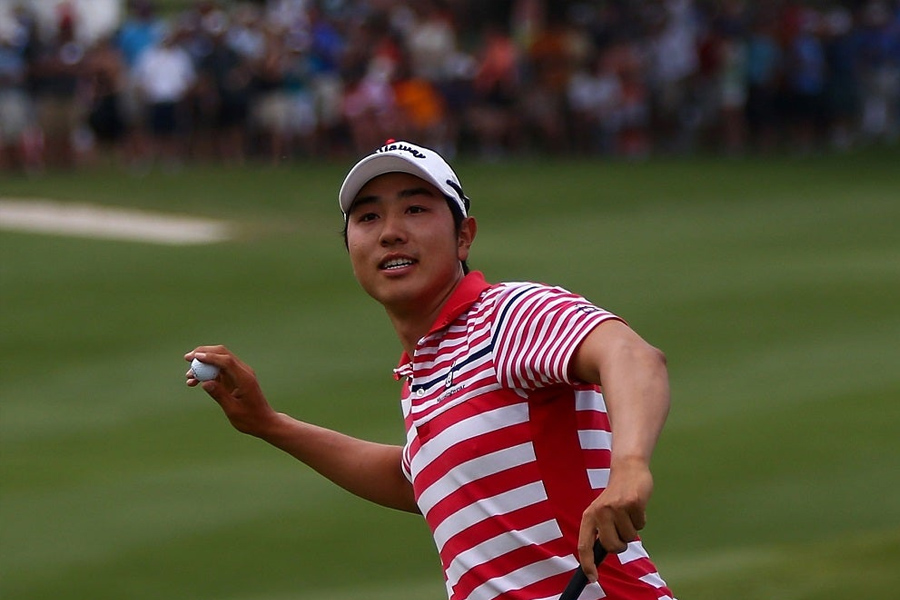
Who Bae Sang Moon Is
In the modern history of Korean men’s golf, Bae Sang Moon helped open the door. Bae, born June 21, 1986, in Daegu, South Korea, achieved domestic and worldwide success. He was noted for winning major tour events and surviving required military duty in South Korea, one of the most prominent suspensions for professional athletes.
Two currents run through his story. One is a golfer’s steady rise via talent, discipline, and repetition. Legal and civic commitments abruptly disrupted his prime competitive years. His career feels like a river tearing through rock due to those currents.
Bae’s 2013 and 2014 PGA Tour wins are merely half of his legacy. He was famous in Korea and Japan before the US discovered him. Not just a golfer who was briefly onstage. He was a seasoned pro with many tours.
Early Life and Entry Into Golf
Bae Sang Moon grew up in South Korea as golf was becoming more popular, yet Korean women golfers still garnered the most attention. He learned patience and accuracy in a competitive amateur setting as a young player. Golf was both an opportunity and a challenge in a competitive country.
His youthful play was important. Golf encourages repetition like sculptors praise steady hands. Bae developed the mechanics, mental control, and tournament attitude that distinguished his career before television attention or worldwide headlines.
By the early 2000s, he was professional. That change put him in a position where domestic results may immediately affect international possibilities. In subsequent years, he became one of South Korea’s most regarded male golfers, demonstrating consistency that often dwarfs a single great performance.
Family Background and Private Life
Bae Sang Moon has diligently guarded his private life, as I can see from his public image. Bae has kept her family private, unlike entertainers and athletes. That restraint makes him appear calculated and disciplined, which are ideal for professional golf.
His Mother, Si Ok-hee
Bae Sang Moon’s mother, Si Ok-hee, is one of his few public relatives. After her naming, little has been widely reported. Little is known about her career, education, business, or public persona.
That absence of detail says something in itself. In many athlete profiles, family members become familiar public figures. In Bae’s case, his mother appears more as a quiet presence in the background, part of the foundation rather than part of the spotlight.
His Father
Bae’s father has been mentioned in golfing articles, especially those discussing his childhood and training. In major English-language sports biographies, his father’s public profile has not been consistently validated and extensively reported.
For that reason, it is difficult to present a detailed personal portrait of his father with confidence. What can be said is that parental influence is often essential in golf, especially in a player’s youth, where travel, equipment, coaching, and emotional support all matter.
Spouse, Children, and Siblings
No publicly verified marriage has been consistently documented in major golf or biographical profiles. Likewise, no reliably confirmed public information identifies children or siblings. That makes Bae one of those athletes whose professional resume is far more visible than his household circle.
Building a Career on the Korean Tour
Before international audiences followed his results, Bae had already established himself as a serious force on the Korean Tour. Those early professional years were crucial. They gave him tournament experience, confidence under pressure, and a place among the country’s top male golfers.
He earned multiple victories and developed the profile of a leading domestic player. Success on the Korean Tour was not just a local achievement. It served as proof that he could compete week after week, adapt to pressure, and finish events with authority.
In many careers, the early domestic phase is only briefly mentioned after bigger achievements arrive. In Bae’s case, I think it deserves stronger emphasis. Those years were the forge. Without them, the later success in Japan and on the PGA Tour would not make as much sense.
His Breakthrough in Japan
One of the most important chapters in Bae Sang Moon’s career came on the Japan Golf Tour. For many golfers in Asia, Japan represents a highly competitive arena, one with deep fields, strong traditions, and real international credibility. Bae did not merely participate there. He excelled.
His 2011 Japan Golf Tour earnings led the pack. That achievement was significant. A money title involves multiple hot streaks. It requires season-long greatness, powerful finishes, and the ability to adapt to changing courses, conditions, and pressure.
Outside Asia, some casual fans know him mainly for his American wins. I see that as an incomplete picture. His 2011 season in Japan was not a side note. It was one of the clearest signs that he had matured into a truly international-level professional.
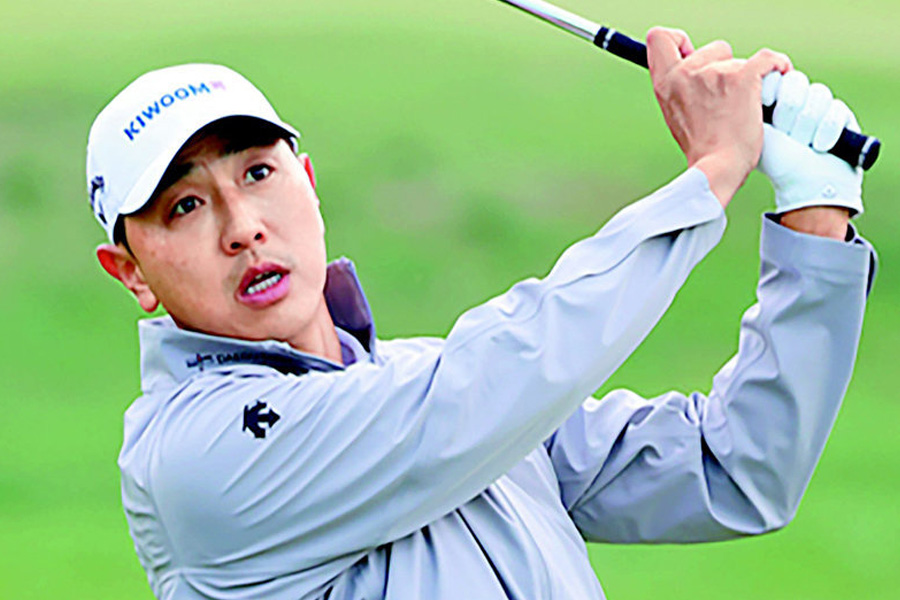
PGA Tour Success and Global Recognition
Bae’s move into PGA Tour competition gave him a bigger audience and an even steeper challenge. The PGA Tour is a landscape where reputations are tested every week. Yet Bae did more than survive there. He won.
First PGA Tour Win in 2013
His first PGA Tour victory came at the HP Byron Nelson Championship in 2013. That win placed him in a small group of Korean-born golfers who had captured a PGA Tour title. It also showed that his game could hold up against elite international competition under intense scrutiny.
A first PGA Tour win often changes how a player is seen. It turns promise into proof.
Second PGA Tour Win in 2014
In 2014, Bae won the Frys.com Open, securing his second PGA Tour title. Two victories in two seasons gave his international standing greater weight. He was no one-hit wonder. He looked like a golfer entering the heart of his best years.
Here is a snapshot of key milestones in his career:
| Year | Milestone |
|---|---|
| 1986 | Born in Daegu, South Korea |
| Early 2000s | Turns professional |
| 2008 | Gains broader recognition in Asian golf |
| 2011 | Wins Japan Golf Tour money title |
| 2013 | Wins HP Byron Nelson Championship |
| 2014 | Wins Frys.com Open |
| 2015 | Begins military service |
| 2017 | Completes service |
| 2018 onward | Returns to professional competition |
The Military Service Dispute
South Korea’s mandatory military duty was Bae Sang Moon’s most talked-about off-course chapter. Elite athletes have typically balanced personal desire and public duty as South Korean men must serve in the military.
Because Bae spent a lot of time overseas and claimed residency exclusions, his case became notable. Not a simple disagreement followed. It was a high-profile court dispute over residency, administrative decisions, and military duties.
The dispute received national attention in South Korea. It was discussed not just in sports circles, but also in broader public conversations about law, fairness, and the responsibilities of public figures. Eventually, the courts ruled against his effort to avoid service.
In 2015, Bae entered military service. For any professional athlete, especially one competing in a skill-based individual sport, time away can be costly. In golf, rhythm matters. Confidence matters. Repetition matters. Competitive instincts can dull when the calendar stops cooperating.
Returning After Service
Bae resumed professional golf in 2017 after military duty. Many were moved by that return. He was not returning from a voluntary or normal injury layoff. He returned following a national duty-related break in his high-level profession.
As often happens in golf, returning to prior form was difficult. The sport does not always give back what time takes away. Still, Bae continued to compete internationally, particularly in Asian events, and remained a respected veteran presence.
His post-service years may not have matched the momentum of 2013 and 2014, but they still added to his legacy. They showed resilience. They showed professionalism. They showed that his identity in golf was not built only on winning, but also on enduring.
Why His Career Still Matters
Bae Sang Moon is significant in Korean golf. Players like K. Choi and Y. E. Yang may have garnered global fame, but Bae helped promote Korean males on international tours. His success in Korea, Japan, and the US inspired future players.
He is also a prime illustration of how non-sport factors can change a career. His military service situation is still highlighted when discussing South Korean sportsmen whose prime years conflicted with required duty. Thus, his name is discussed in two contexts: golf achievement and national responsibility.
Career Achievements at a Glance
Bae’s professional record reflects real breadth across tours and seasons. Key achievements include:
| Category | Achievement |
|---|---|
| PGA Tour | HP Byron Nelson Championship winner in 2013 |
| PGA Tour | Frys.com Open winner in 2014 |
| Japan Golf Tour | Leading money winner in 2011 |
| Japan Golf Tour | Multiple tournament victories |
| Korean Tour | Multiple professional wins |
| International Standing | One of South Korea’s notable male golf figures |
He also earned millions through tournament play, with PGA Tour prize money making up a major portion during his peak years. Public net worth estimates vary, and no fully verified figure stands above the rest, but his earnings clearly reflect a successful international career.
FAQ
Who is Bae Sang Moon?
Bae Sang Moon is a South Korean professional golfer born on June 21, 1986, in Daegu. He became well known for winning on the Korean Tour, excelling on the Japan Golf Tour, and capturing two PGA Tour titles in 2013 and 2014.
What are Bae Sang Moon’s biggest career wins?
His two most recognized victories on the PGA Tour are the 2013 HP Byron Nelson Championship and the 2014 Frys.com Open. He also achieved a major milestone by becoming the leading money winner on the Japan Golf Tour in 2011.
Who are Bae Sang Moon’s family members?
Publicly available information about his family is limited. Si Ok-hee is identified as his mother, while detailed and consistently verified public information about his father is not widely documented. No reliably confirmed public records consistently identify a spouse, children, or siblings.
Why was Bae Sang Moon involved in a military service controversy?
The controversy centered on South Korea’s mandatory military service rules and Bae’s claim that his overseas residency status affected his obligations. The dispute became a national legal issue, and the courts ultimately ruled against his attempt to avoid service.
When did Bae Sang Moon serve in the military?
He began military service in 2015. He completed that service in 2017 and later returned to professional golf competition.
Why is Bae Sang Moon important in Korean golf history?
I see Bae as important because he succeeded across multiple competitive levels. He won in Korea, became a top player in Japan, and claimed two PGA Tour titles in the United States. His career also became a landmark example of how military service can reshape an elite athlete’s trajectory.
Is Bae Sang Moon still active in golf?
Yes, he has continued competing after his military service, mainly in Asian and regional professional events. While his profile is lower than during his PGA Tour peak, he remains part of the professional golf landscape.